A new windmill, built in memory of the ones that disappeared
The surest way to spoil a good story is to exaggerate it. So we'll say it straight away: this windmill isn't old. It was built by one man, a real person with a name, together with the restaurant he opened in 1996, on a hillside where there was nothing at all. Scroll down slowly and watch it grow.
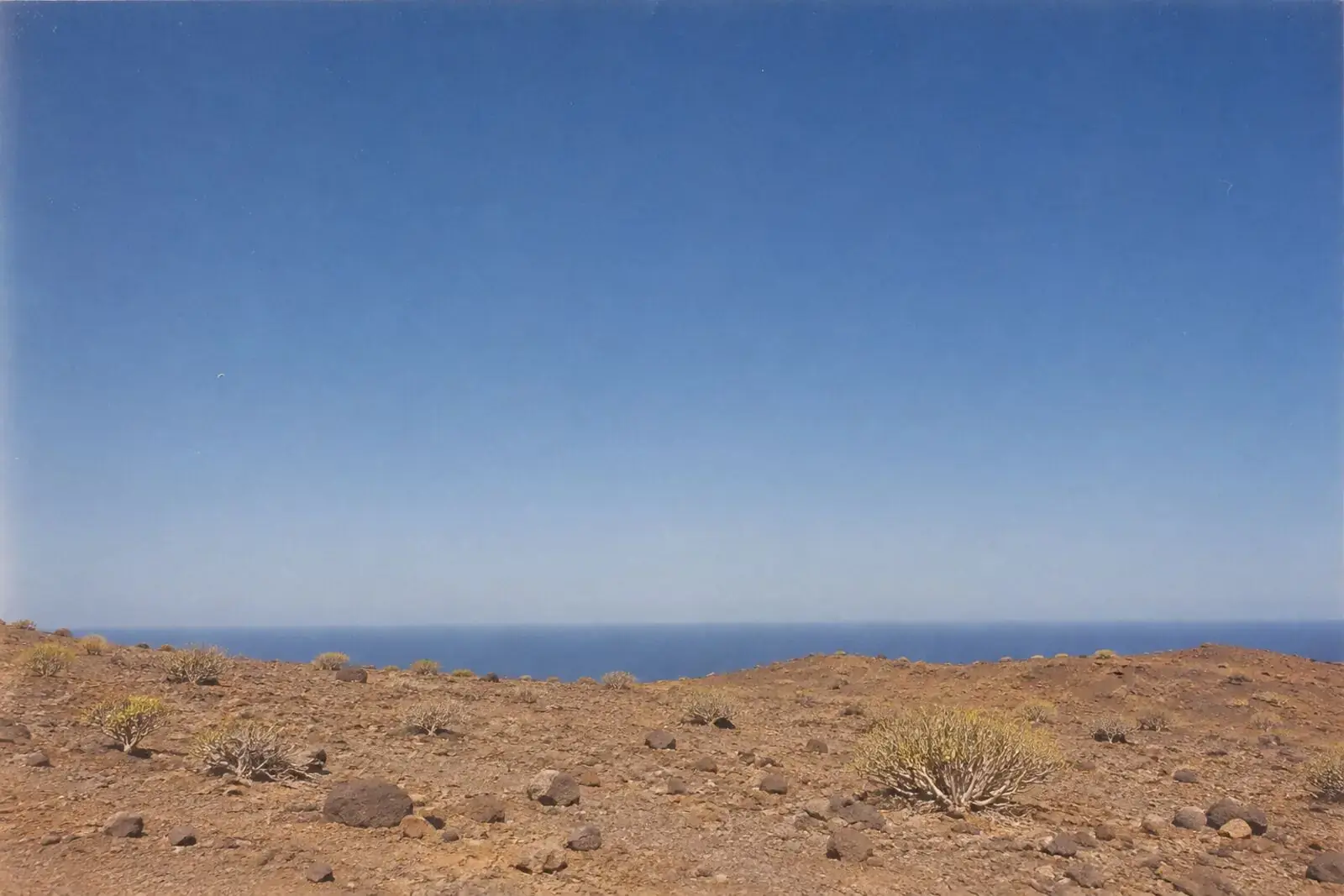
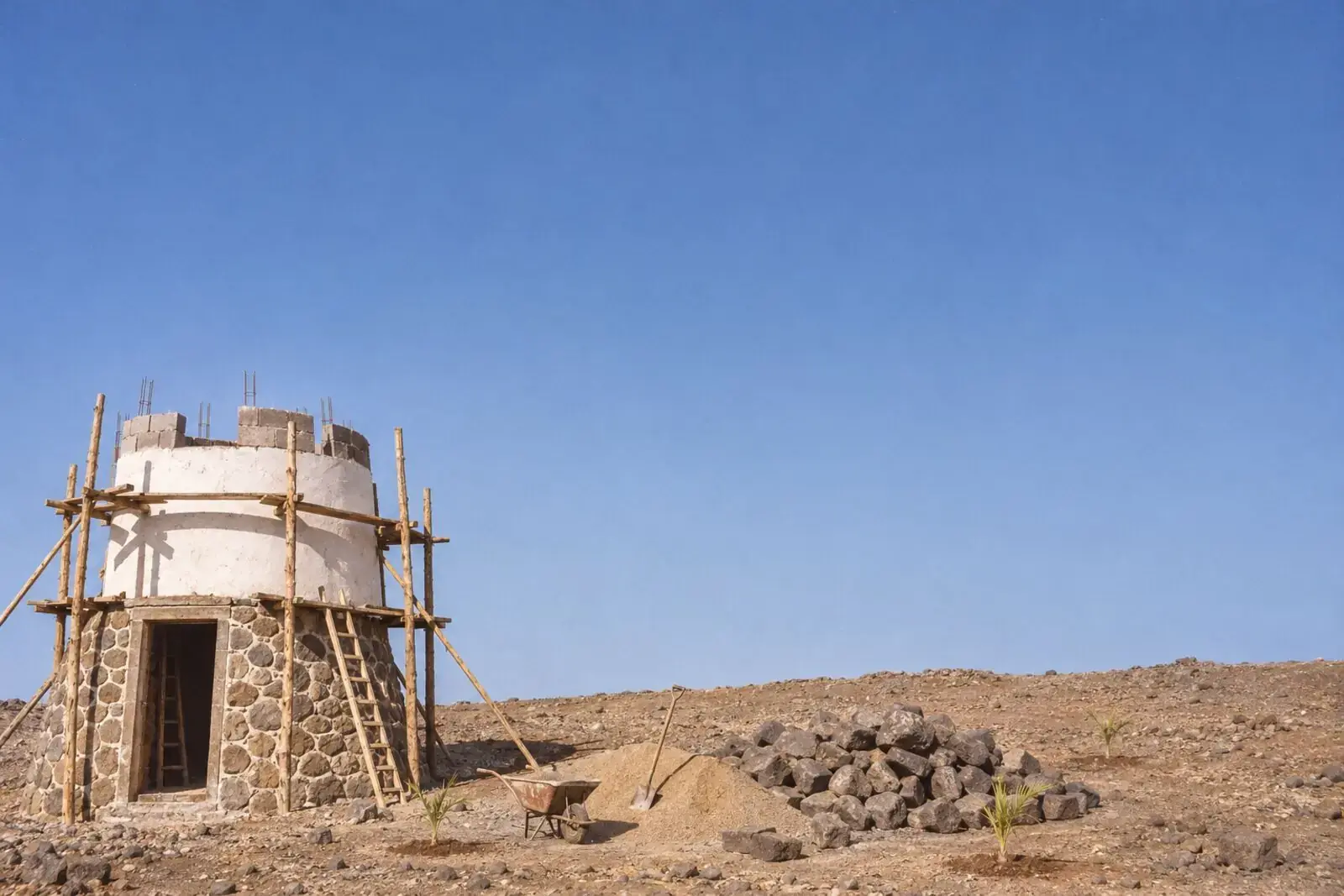
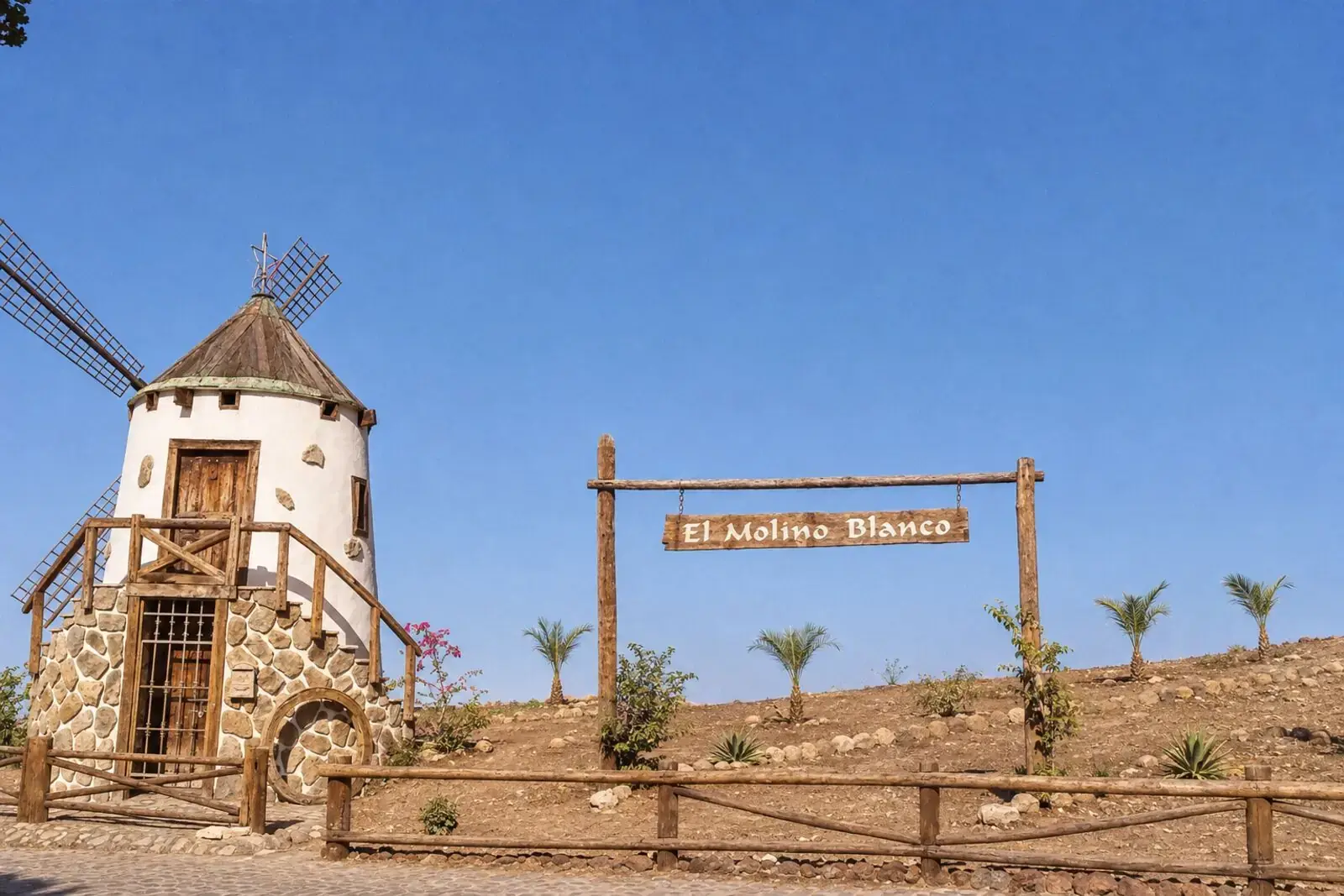
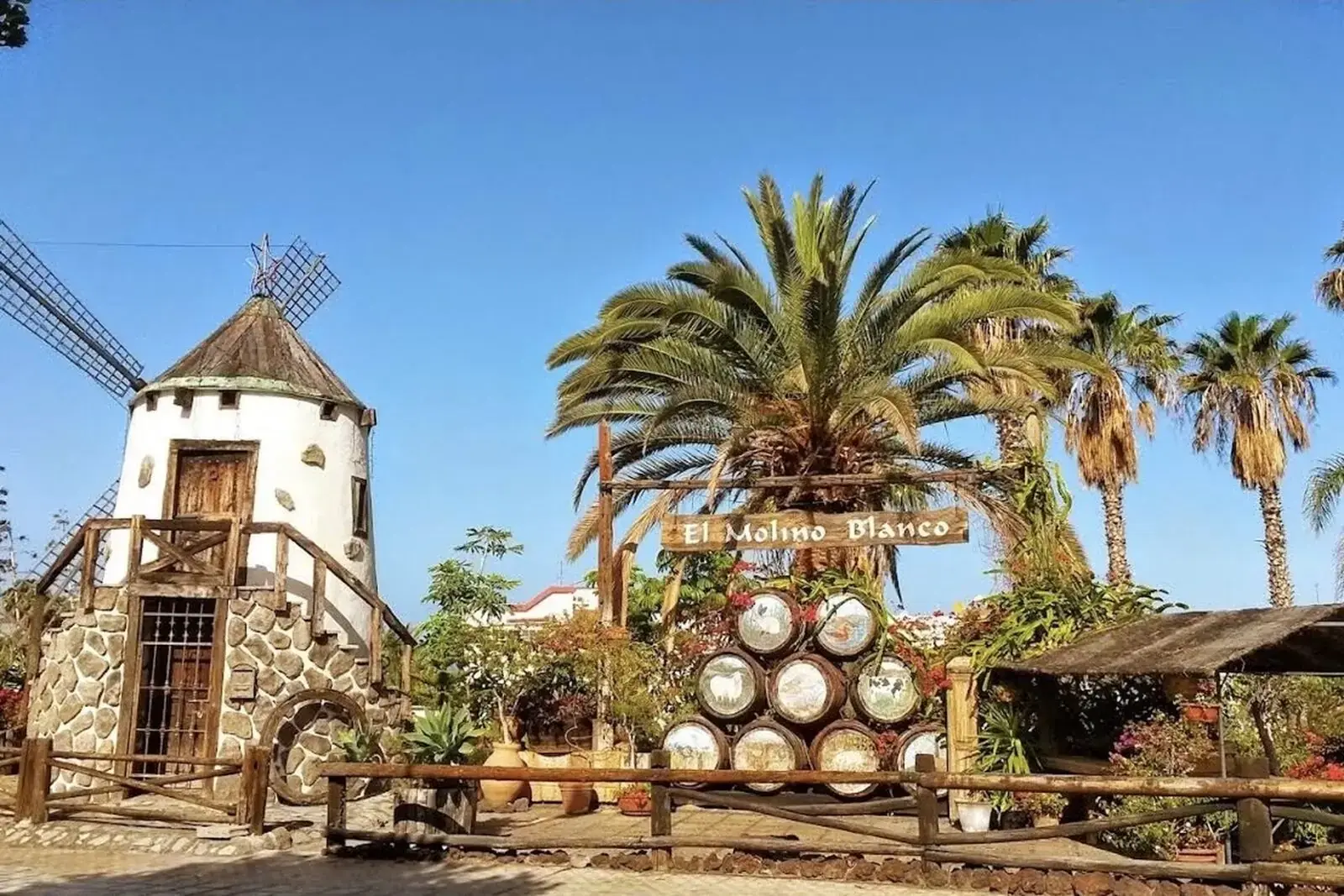
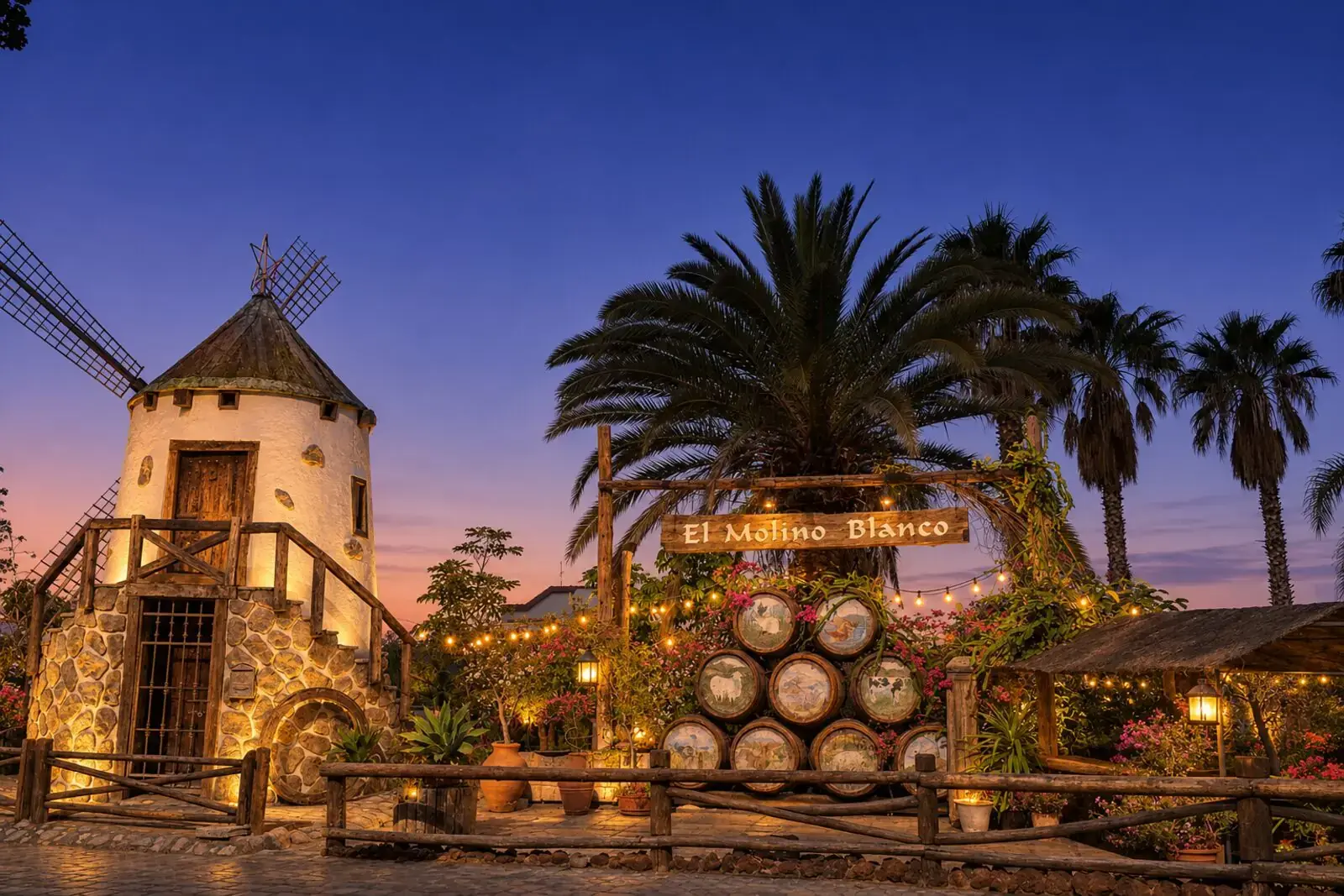
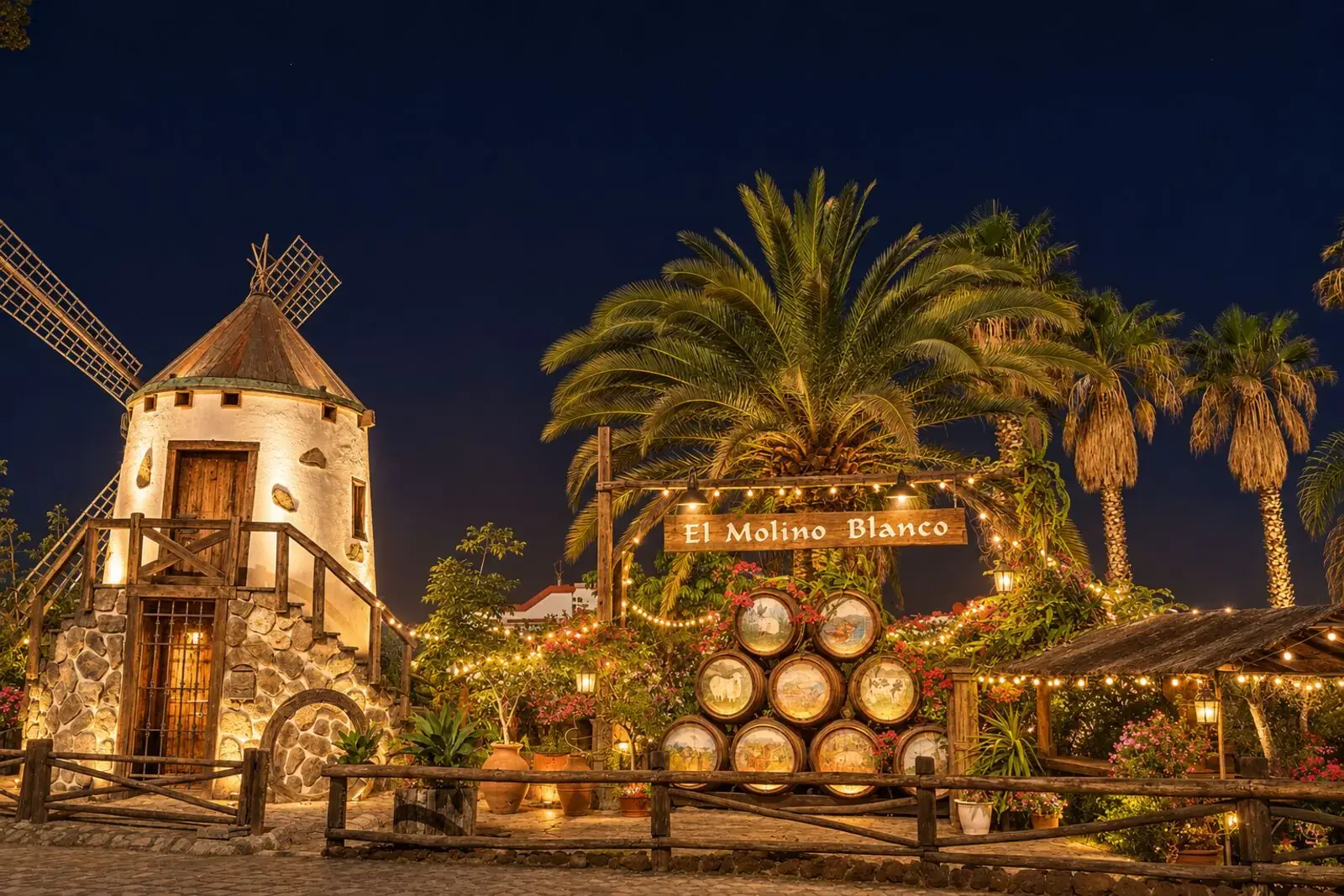
Artist's impression
Before 1996
A hillside above Costa Adeje: a pile of stones and the breeze. Nothing else.
1996
A man born in Tenerife opens the restaurant here and builds a white windmill along with it. Not to grind anything. It's there so nobody forgets that for centuries this island lived on gofio, ground in windmills just like this one.
1996–2004
A garden grows up around the windmill: palm trees, ferns, terracotta pots. Inside the garden, the restaurant starts to fill up.
2009
The founder tells his story to the local press: the hillside, the stones, the gofio. It's the only record of him telling it himself. By then there's already live music every night.
2010–2020
The years go by, and what stays the same is exactly what people come back for: the windmill, the garden, the music every night. The same faces start coming back.
Today
250 seats, live music every night and guests who have been coming back for ten, fifteen and twenty years. The windmill still grinds nothing, and it still makes its point.
In 1996 a man born in Tenerife, who had worked in restaurants since he was eighteen, sat down on that hillside, felt the breeze and decided his restaurant would be there. He named the place before he built it: El Molino Blanco.
For centuries the staple food of these islands was gofio, a flour made from toasted grain and ground in white windmills that stood on top of every hill. By the end of the twentieth century hardly any were left standing in the south. He built one so his guests would know where the food of this island came from.
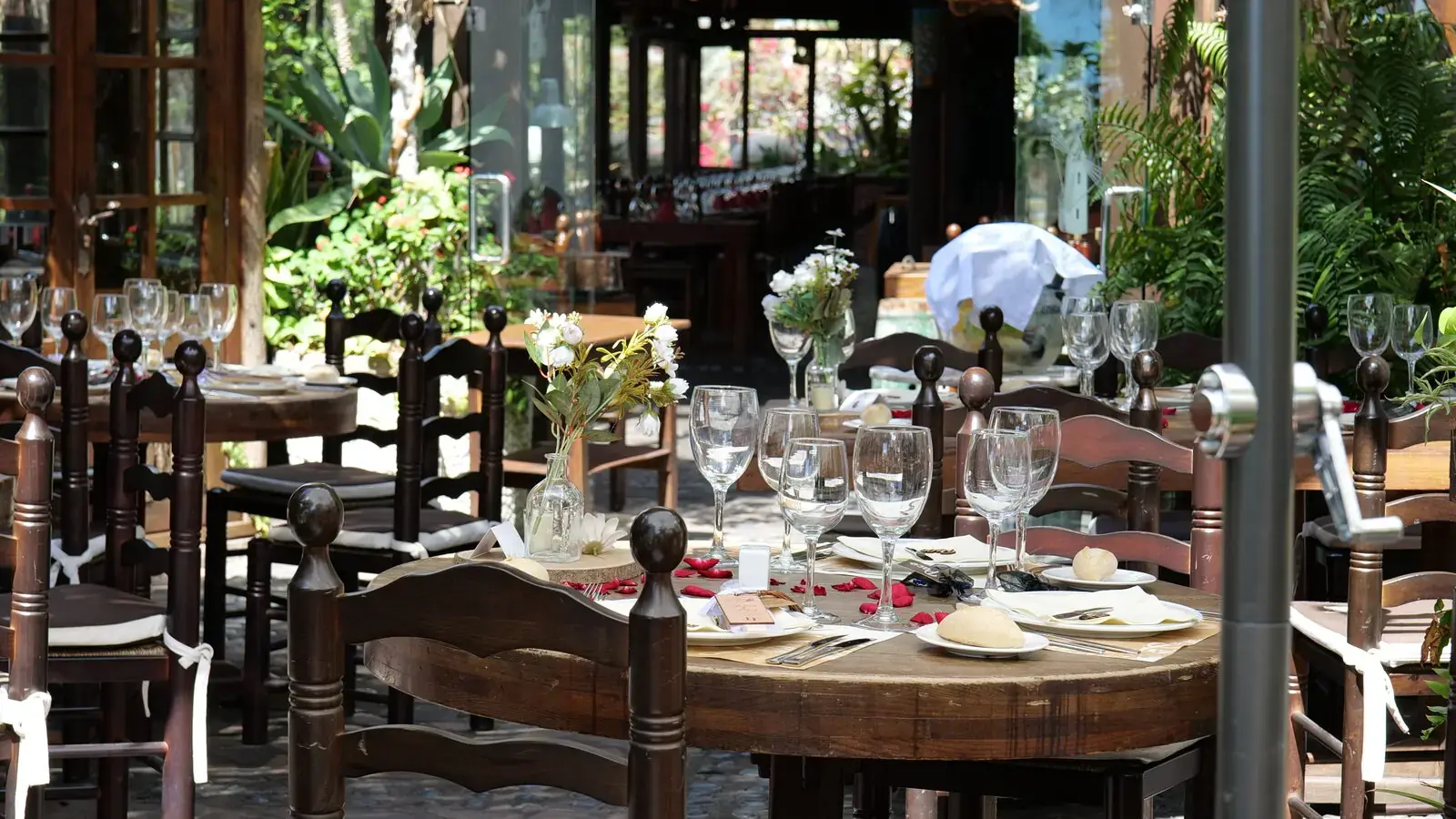
Thirty years on, the garden is what returning guests remember most: palm trees and ferns, a patio under old beams with farm tools from rural Tenerife, terracotta pots, an iron Don Quixote facing the windmill and a small stage where the piano plays every night and, on some nights with no fixed dates, someone sings.
Where the garden is now, there was nothing on the hillside but a pile of stones.
From the interview with the founder in Island Connections, 12 September 2009. This is a paraphrase, not his exact words.
The key dates, and where each one comes from
You'll find four different founding years for this restaurant online. We go with the one the founder himself gave in a published interview, and we show where every fact comes from.
- 1996
The idea, the name and the restaurant
The founder picks the hillside, opens the restaurant under the name he'd already chosen and builds the white windmill along with it.
Source: interview with the founder, Island Connections, 12 September 2009 - 2004
The restaurant goes online
The restaurant's web addresses are registered, and the first version of the website is archived that same April.
Source: domain registration records and the public web archive - 2009
The only interview with the founder
Thirteen years after opening, the founder tells the local press where the name came from, and about gofio and the hillside of stones. Almost everything on this page comes from that interview.
Source: Island Connections, 12 September 2009 - 2017
The press comes back to the garden
An island magazine writes about the food, the dining room and the gazebo tucked away among the plants.
Source: Tenerife Magazine, 22 May 2017 - Today
What hasn't changed
Live music every night, the Châteaubriand carved at the table, flambé desserts made where you can see them, and guests who have been coming back for ten, fifteen and twenty years.
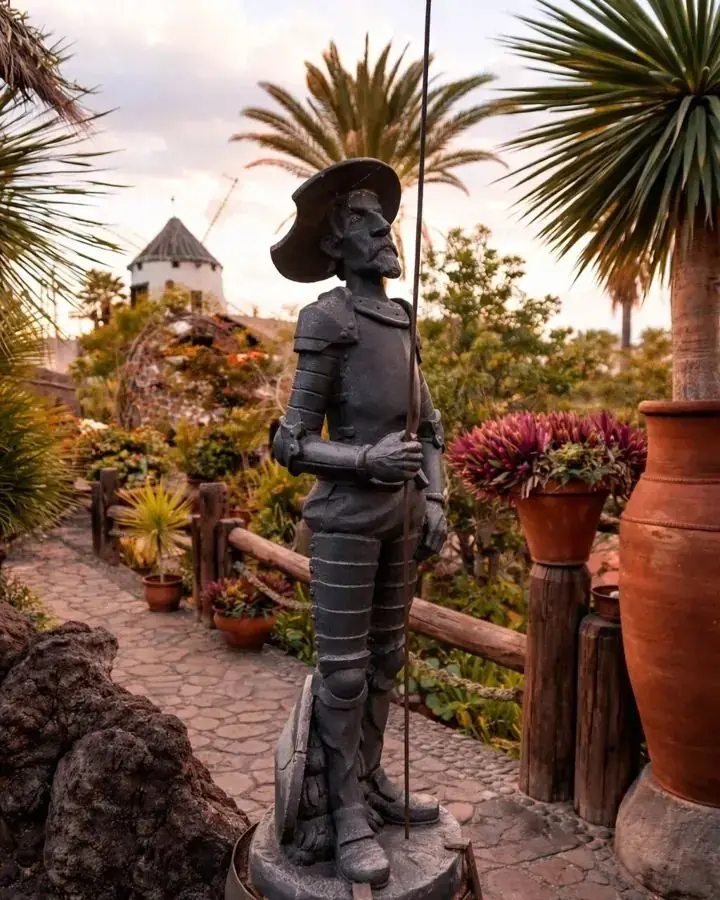
The knight who keeps watch over the windmill
On the garden path stands an iron Don Quixote, lance raised, his back to the world and his eyes on the windmill. He's our oldest joke and the photo most people take home: the only knight who can charge at this windmill without spoiling anyone's evening.
Around him are more pieces in the same spirit: farm tools, pottery, a cartwheel, lanterns. Everything someone wanted to keep when the farmland of the south gave way to hotels.
Make a wish
It's a custom here. Before you leave, rub the knight's boot and make a wish without saying it out loud. They say round here that it comes true.
This story is better told at the table
The menu still has the island dishes it always had: papas arrugadas (small wrinkled potatoes) with mojo, rabbit, and the gofio that the windmill is all about. They're cooked the way they always were, because here tradition isn't something hung on the wall. It's on the plate.
Book a table and sit among old beams and farm tools from the Canarian countryside. Ask whoever is looking after you about the windmill: everyone here can tell the story, and each of them tells it a little differently.